What Are Mergers and Acquisitions (M&A)? Definition, Types, Process and Examples
Mergers and acquisitions (M&A) are strategic transactions in which companies combine or one business acquires another to pursue growth, market expansion, efficiency, technology, talent, or competitive advantage. This guide explains the main types of M&A, why companies pursue these deals, how the M&A process works from due diligence to post-merger integration, and notable examples across technology, retail, healthcare, agriculture, and media.

M&A (mergers and acquisitions) refers to transactions in which one company buys another, or two companies combine into a single entity, to pursue strategic goals like growth, market power, or efficiency.
Mergers and acquisitions are transactions in which the ownership of companies or their operating units (including assets and liabilities) is transferred to or consolidated with another entity.
A merger usually means two companies of similar strength combine into a new legal entity. In contrast, an acquisition means one company purchases and takes control of another company or its major assets.
In practice, many deals mix elements of both, but the core idea is that separate businesses end up under unified control after the transaction.
Why Companies Do M&A
Companies use M&A to expand faster than they could through organic growth, for example, entering new markets, acquiring new product lines, or gaining access to technology and talent.
Typical motives include achieving economies of scale (lower costs through larger operations), increasing market share, diversifying risk, and creating synergies, where the combined company is more valuable than the two separately.
M&A can also be driven by financial and tax considerations, regulatory changes, or the opportunity to buy distressed companies cheaply and turn them around.
Common Deal Types
M&A isn’t just one kind of transaction; there are several standard deal structures: Merge of equals, Acquisition, Horizontal deal, Vertical deal, and Conglomerate deal. In the following table, you can compare them more clearly.
Deal type | What it is | Typical goal | Example |
Merger of equals | Two similar‑size firms combine into a new entity with shared ownership. | Synergies, scale, shared brand and resources. | Exxon–Mobil merger, creating ExxonMobil in 1999. |
Acquisition (takeover) | One company buys another’s shares or assets and takes control. | Market expansion, technology/talent acquisition, competitive advantage. | Amazon’s acquisition of Whole Foods in 2017. |
Horizontal deal | Companies in the same industry and stage of production combine. | Greater market share, reduced competition, economies of scale. | Kraft Foods merging with Heinz to form Kraft Heinz. |
Vertical deal | Companies at different points in the same supply chain combine. | Better control of inputs or distribution, cost savings. | CVS (pharmacy/retail) merging with Aetna (health insurer). |
Conglomerate deal | Companies from unrelated industries combine. | Diversification of risk and earnings. | Tata Tea’s acquisition of Tetley (tea brand). |
How an M&A Deal Usually Works
Most M&A processes follow a recognizable sequence: first the buyer defines its strategy and why a deal makes sense, then identifies and approaches potential targets.
If there is interest, the buyer performs due diligence, deeply reviewing the target’s finances, operations, legal risks, customers, technology, and culture to test whether the deal’s assumptions hold.
After that, the parties negotiate price and terms, sign a letter of intent, agree on a definitive purchase or merger agreement, close the transaction, and then work on post‑merger integration, which is where many deals ultimately succeed or fail.
M&A in Tech and Media Examples
The Walt Disney Company has used acquisitions for decades to build a powerhouse content portfolio, buying Miramax (1993), Fox Family Worldwide (2001), The Muppets (2004), Pixar (2006), Marvel (2009), Lucasfilm (2012), and 21st Century Fox (2019).
Strategically, these deals gave Disney beloved characters, franchises, and studios, which it could cross‑sell across movies, TV, merchandising, theme parks, and later streaming via Disney+.
Similarly, Google’s acquisition of YouTube in 2006 and later DoubleClick and Waze helped it dominate online video, digital advertising, and mapping/navigation by adding high‑growth platforms to its core search business.
M&A in Retail and Consumer Examples
Amazon’s 2017 acquisition of Whole Foods for about 13.7 billion USD gave the online retailer an immediate physical grocery footprint and access to affluent urban customers.
The deal let Amazon combine its logistics and pricing power with Whole Foods’ brand and locations, accelerating its push into grocery and same‑day delivery.
The merger between Kraft Foods Group and H.J. Heinz Company created Kraft Heinz, a giant in packaged foods, aiming to use scale to reduce costs, streamline operations, and strengthen global brands in a mature, competitive industry. online.
M&A in Pharma and Agriculture Examples
Bayer’s acquisition of Monsanto, finalized around 2018 for roughly 66 billion USD, aimed to make Bayer the global leader in agricultural chemicals and seeds by combining crop‑science portfolios.
Strategically, Bayer sought synergies in R&D, product breadth, and global distribution. Still, the deal also brought significant legal and reputation risks due to controversies and lawsuits surrounding Monsanto’s glyphosate‑based weed killer.
This illustrates that while M&A can transform market position, it can also import serious liabilities and public‑relations challenges that must be carefully weighed in valuation and due diligence.
M&A in Finance and Healthcare Examples
The 2018–2019 CVS–Aetna merger combined a major pharmacy/retail chain with a large health insurer, creating a vertically integrated healthcare company.
The idea was to control more of the healthcare value chain (insurance, pharmacies, clinics, and data) so CVS could manage costs better, offer integrated services, and compete with other emerging healthcare models.
Such vertical deals highlight how M&A can be used not just to grow bigger, but to reshape how an industry delivers services and captures value end‑to‑end.
M&A in Recent Large‑Scale Tech Deals
In 2025, Alphabet (Google) announced the acquisition of Israeli cybersecurity startup Wiz for about 32 billion USD, its largest acquisition to date.
The deal was designed to strengthen Google’s cloud security offerings and competitive position versus Microsoft and Amazon, showing how M&A is used to fill strategic gaps in technology capabilities quickly.
Transactions like Alphabet–Wiz reflect a broader trend in which large tech platforms use acquisitions to stay ahead in fast‑moving areas such as cybersecurity, AI, and cloud services rather than building everything in‑house.
Keep reading
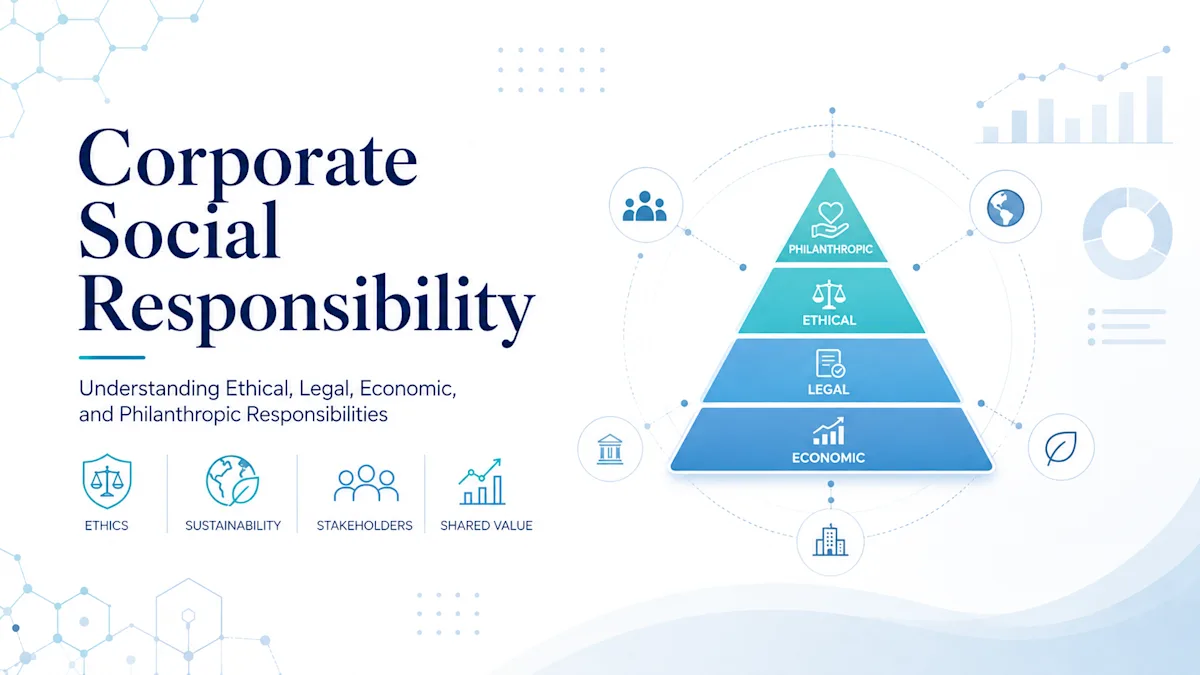
What is Corporate Social Responsibility (CSR)?
Corporate Social Responsibility (CSR) describes how businesses address their economic, legal, ethical, social, and environmental responsibilities. This article explores the evolution of CSR, Carroll’s CSR pyramid, strategic and responsive CSR, and key standards including ISO 26000, ISO 14001, GRI, and the UN Global Compact.

Sallar Rabiei
Trust as the Catalyst: Strengthening Product-Scrum Relationships
Trust is the foundation of effective collaboration in agile teams. This article examines how trust between Product Managers and Scrum Masters can improve communication, psychological safety, role clarity, conflict resolution, and team performance, with practical strategies and real-world examples from organizations such as Google and Spotify.
Sallar Rabiei
Transformational Leadership: Assessing its Impact on Employee Performance and Motivation in Medium-Sized Tech Organizations
This research examines the impact of transformational leadership on employee performance and motivation in medium-sized technology organizations. Based on a survey of 41 employees, the study explores how leadership practices such as inspirational motivation, individualized support, recognition, and encouragement of innovation influence workplace performance, motivation, and organizational commitment.
Sallar Rabiei